
Help4 Builder Structured Fields
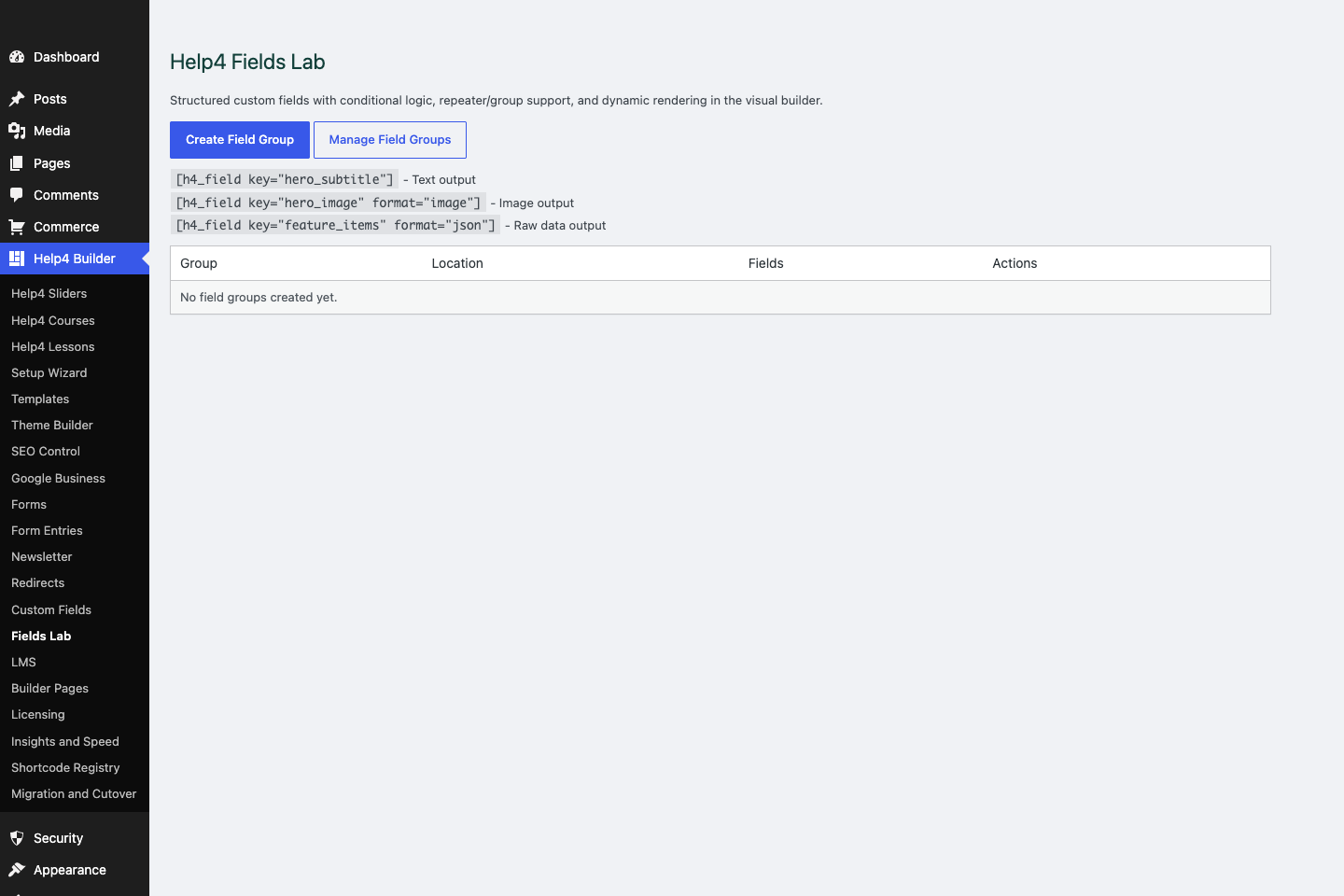
Fields Lab
Plan field groups, repeaters, images, and dynamic output for content that should not be edited as fragile page text.
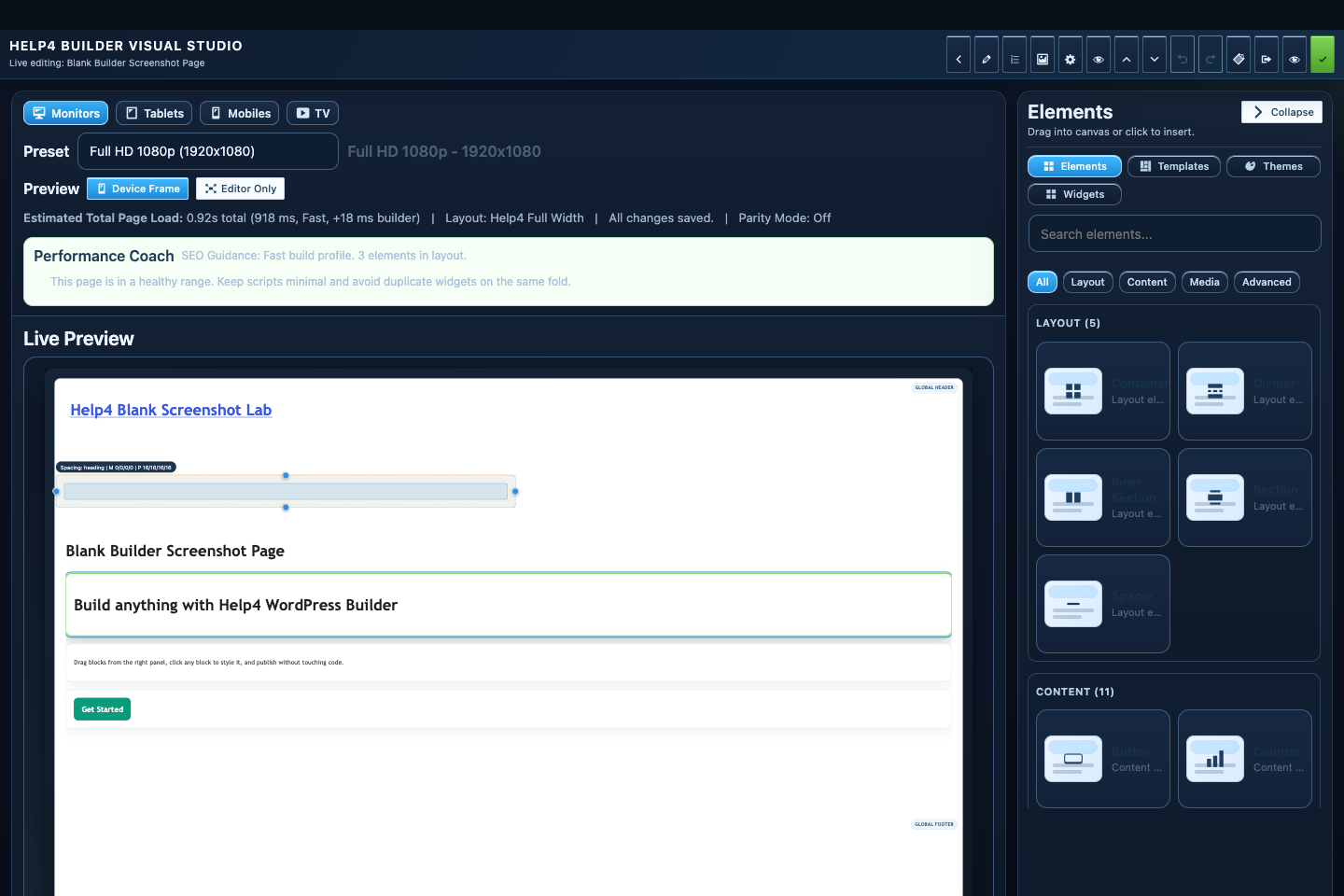
Builder Studio
Build the page visually with responsive controls, element panels, performance guidance, and a live preview.
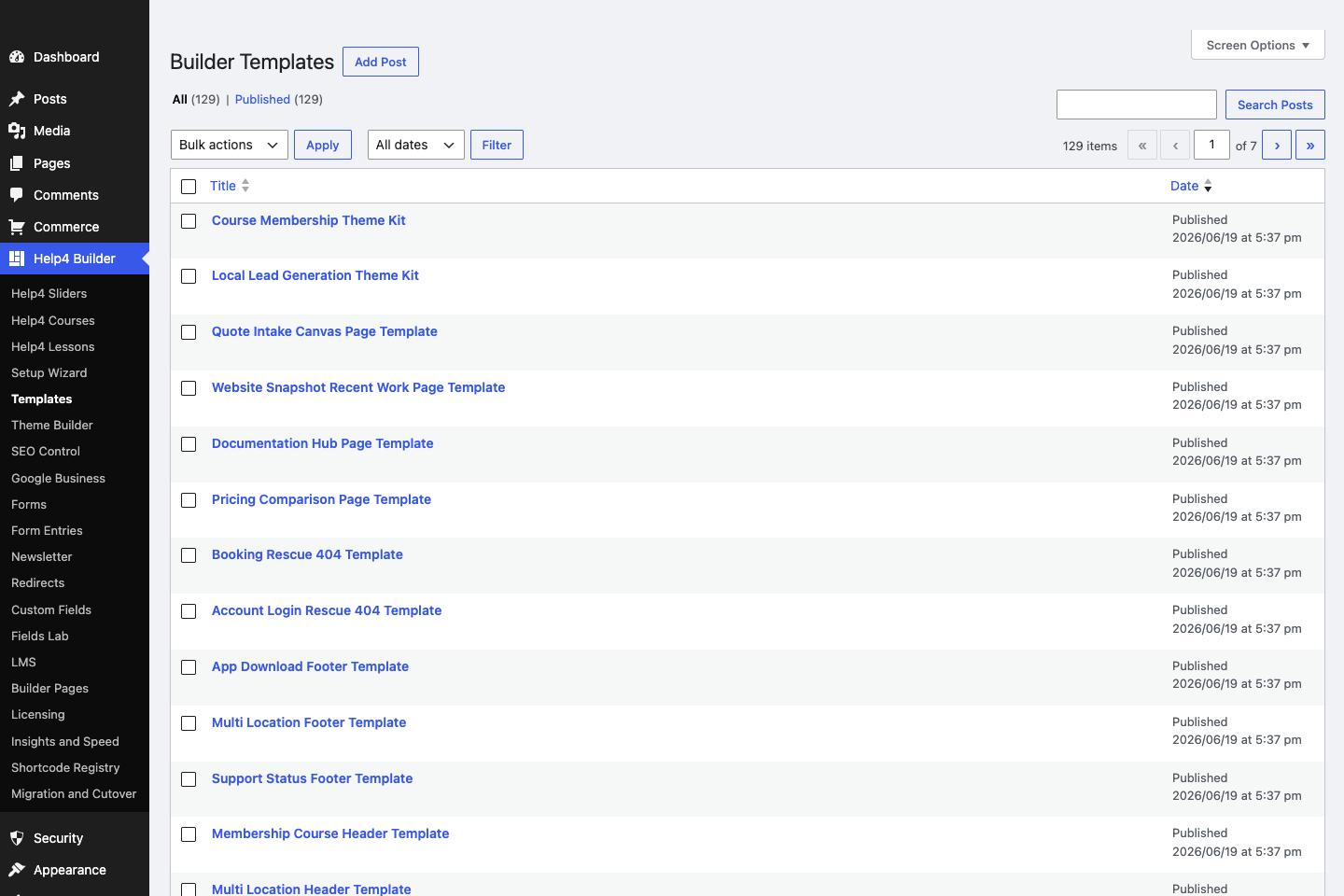
Template Library
Start from page-purpose templates instead of staring at a blank canvas.
When to use fields
Fields keep complex content clean for the person editing it later.
If the same kind of information appears over and over, structure it instead of asking someone to edit a fragile layout by hand.
Field groups
Use for related content that belongs together.
Repeaters
Use for lists that grow or shrink.
Dynamic output
Use Builder templates so data edits do not break design.
Step
Name the real object
Service, location, team member, product spec, FAQ, gallery, plan, or testimonial.
Step
Group related fields
Keep fields together around the object people understand.
Step
Use repeaters for rows
FAQs, features, steps, gallery items, and service areas should not be copy-pasted blocks.
Step
Validate required values
Optional everything creates empty sections and confusing pages.
Step
Render through templates
Let customers update data while the design stays consistent.
Start here
Install and setup
Download the ZIP, activate Builder Suite, understand the blank-theme path, and run the first clean check.
First page
Build a page safely
Open Builder Pages, launch Studio, build structure first, check mobile, then publish or hand it to Help4.
Templates
Choose a starter
Pick a starter spec by page job: service, product, support, recent work, local SEO, launch, or checkout recovery.
Theme layer
Headers and footers
Use Theme Builder for global headers, footers, 404s, page shells, canvas pages, popups, and conditions.
Fields
Structured content
Use fields when content repeats: FAQs, service areas, specs, team members, galleries, relationships, and product data.
Commerce
Products and payments
Plan catalog data, variations, subscriptions, checkout context, and payment routing before launch.
Capture leads
Forms and sliders
Use forms and motion only where they support the page goal and do not load extra assets everywhere.
Launch QA
SEO, speed, security
Check metadata, schema, readability, AdSense-style quality, Analytics intent, SSL, headers, images, and mobile.
Proof
Website Snapshot
Turn public URLs into safe website screenshots for recent work, migrations, support notes, and launch recaps.
Release safety
Updates
Use stable live packages and md beta testing to keep Builder Suite ready for the next WordPress line.
Need help with this step?
Send Help4 the page, screenshot, or site goal.
Include the URL, what you are trying to build, what looks wrong, and whether this is a draft, staging site, or live customer page.